Dr. Gymbro
←

#muscle growth

8 articles
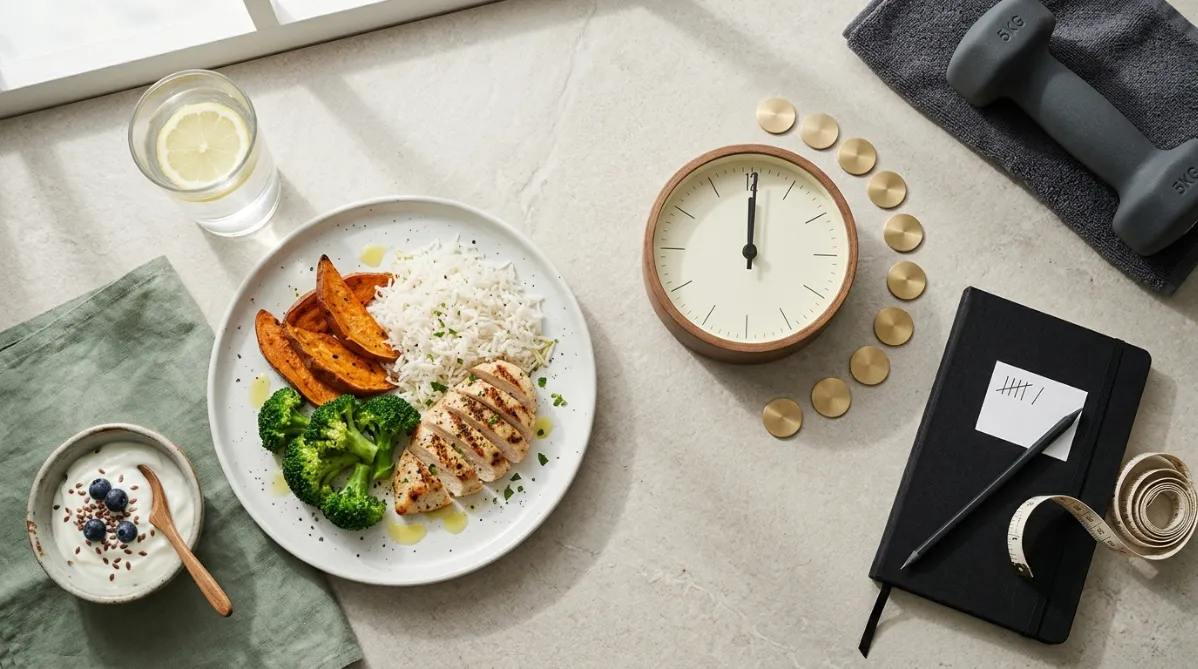
A wide, editorial-style flat lay photographed from above on a pale warm-gray stone surface, bathed in soft natural window light with gentle diagonal shadows. On the left side, a minimalist matte white ceramic plate holds a balanced bulking meal: sliced grilled chicken breast, a mound of fluffy basmati rice, roasted sweet potato wedges, and bright green broccoli, with a drizzle of olive oil glistening. Beside it sits a tall glass of water with a lemon slice and a small bowl of Greek yogurt topped with blueberries. On the right side, a round analog clock face is subtly placed, or a simple wooden clock with a minimalist design, its hands marking noon, with a soft arc of eight small brushed-brass discs arranged in a curved line beside it, suggesting an eight-hour eating window. A sleek black notebook with a pencil rests nearby, with a few hand-drawn tally marks and a tape measure loosely coiled next to it. A single dumbbell with a matte charcoal finish sits at the top right edge, partially cropped, hinting at strength training. The color palette is muted and sophisticated: sage green, warm cream, terracotta, soft charcoal, and touches of brass. Generous negative space on the right third for title text overlay. Shallow depth of field with crisp focus on the plate, subtle film grain, and a calm, modern wellness-magazine aesthetic reminiscent of contemporary health and fitness journals. Clean composition, natural textures like linen napkin and speckled ceramic, and no people or text visible.
nutrition

16:8 Fasting While Bulking: Same Muscle, Less Than Half the Fat Gain

BY DR. GYMBRO ·

Lifters who squeezed their bulk into an 8-hour window gained the same muscle and strength as normal eaters, with less than half the fat gain. The twist is that fasting wasn't the magic. The 16:8 group simply ate less than the prescribed surplus, which also meant less protein and carbs. This 12-week randomized trial suggests time-restricted eating works as a lean-bulk adherence tool, not a metabolic hack. Here are the numbers, the protein target that held up, and who should try it or skip it.
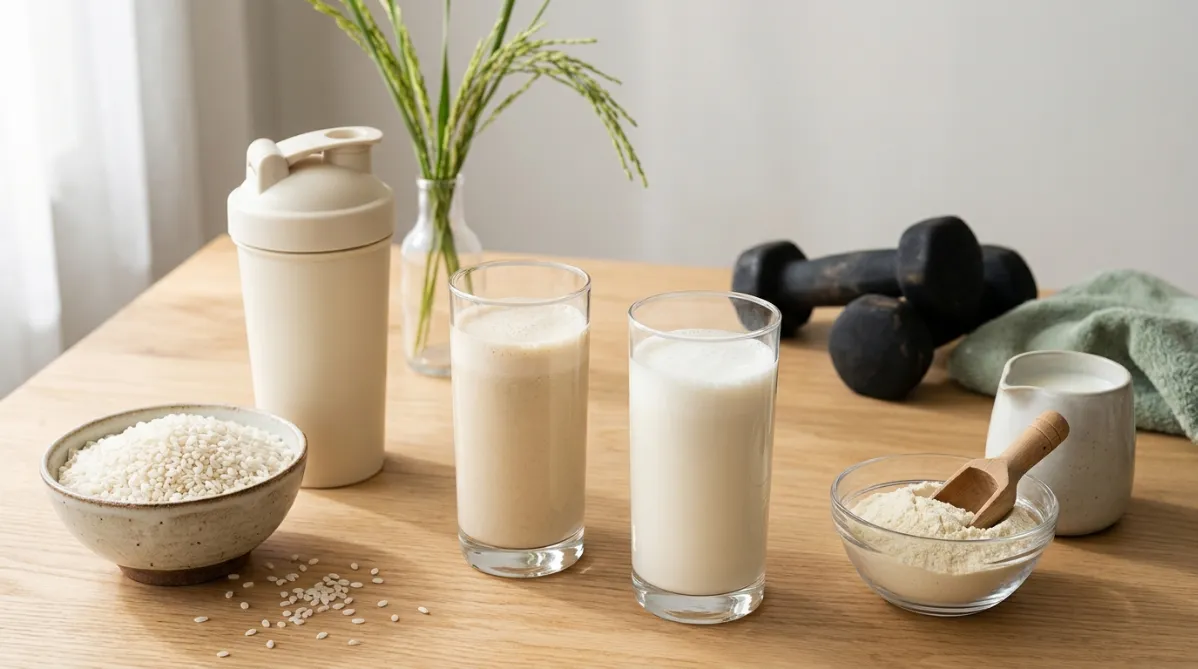
A bright, minimalist editorial still life on a pale oak table, shot from a slightly elevated three-quarter angle in soft natural window light. On the left sits a rustic ceramic bowl of uncooked short-grain white rice, with a few grains scattered across the wood. Beside it is a matte cream-colored shaker bottle. On the right is a small glass bowl of fine ivory whey powder with a wooden scoop resting in it, and a small pitcher of milk behind it. Two identical tall glasses of creamy, lightly frothed shake stand side by side in the center, one a touch warmer beige and the other a soft white. They suggest equal outcomes without any text or labels. A pair of worn black neoprene-coated dumbbells and a folded sage-green gym towel sit slightly out of focus in the background. A sprig of green rice stalks in a slim vase adds a fresh, natural accent.

The palette is warm neutrals: cream, oatmeal, soft sage, and muted terracotta, with gentle shadows and a shallow depth of field. The surface has subtle grain, and fine powder dust is caught in the light. The composition is clean and balanced, with generous negative space on the upper right for a headline overlay. The mood is calm, modern, and health-forward, like a contemporary nutrition magazine or wellness journal. Photorealistic, crisp detail, creamy bokeh, and a gentle matte film-like finish.
nutrition

48 g of Rice Protein Matched Whey for Muscle and Strength in 8 Weeks

BY DR. GYMBRO ·

Plant protein is supposed to lose to whey, but a 2013 trial in trained men found otherwise at a big dose. In 24 resistance-trained males, 48 g of rice protein isolate after training produced the same gains in lean mass, muscle thickness, strength, and power as 48 g of whey over eight weeks. Why did rice keep up? The large dose may have closed the leucine gap. Here is what the study showed, where its limits lie, and how vegans and dairy-intolerant lifters can use it.
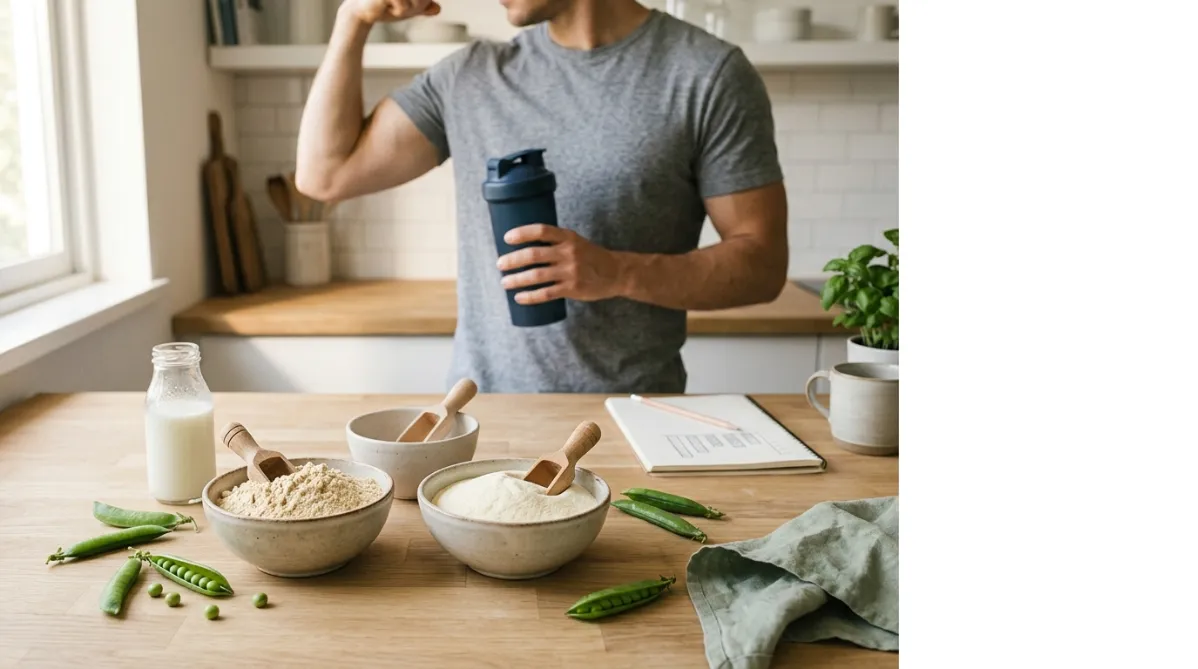
A bright, airy, minimalist kitchen counter in soft morning light, shot from a slightly elevated three-quarter angle in a wide landscape composition. Two matching ceramic bowls sit side by side on a pale oak butcher-block surface. The left bowl holds fine, creamy-beige pea protein powder with a small wooden scoop resting in it. The right bowl holds smooth, ivory-white whey powder with an identical scoop. Between and slightly behind them sits a third, smaller empty bowl with a plain scoop, hinting at the placebo. Scattered around the bowls are fresh green pea pods, some split open to reveal bright, round peas, and a small glass bottle of milk with delicate condensation. A sage-green linen napkin is folded loosely at the edge of the frame.

In the soft-focus background, a young man in a fitted heather-gray t-shirt is seen from the shoulders down, casually flexing one arm while holding a matte shaker bottle, the biceps subtly defined and the pose relaxed and natural. A minimalist notebook with a pencil and a simple hand-drawn bar chart lies open on the counter, suggesting analysis without legible text. A small potted herb plant and a ceramic mug add warmth.

The color palette is muted and editorial: warm cream, sage green, soft terracotta, pale wood, and touches of charcoal. Light streams in from a window on the left, casting gentle long shadows and a subtle golden glow across the powders so their textures look fine and tactile. Shallow depth of field keeps the bowls crisp while the background melts into a creamy blur. The look is modern lifestyle-magazine photography, clean and uncluttered, with generous negative space on the right third of the frame for headline overlay. It is natural, appetizing, and trustworthy, in the style of a contemporary wellness and nutrition journal.
nutrition

Pea Protein vs Whey: The Beginner Result Nobody Expected

BY DR. GYMBRO ·

Can plant protein really build muscle like whey? A 12-week trial of 161 men put pea protein, whey, and placebo head-to-head, and the beginner results turned heads: +20.2% biceps thickness for pea versus +8.6% for placebo. But the full-group difference was only a trend, and the standout finding came from a subgroup analysis. Here's what the study found, what it didn't prove, and how vegan or lactose-intolerant lifters can use it.
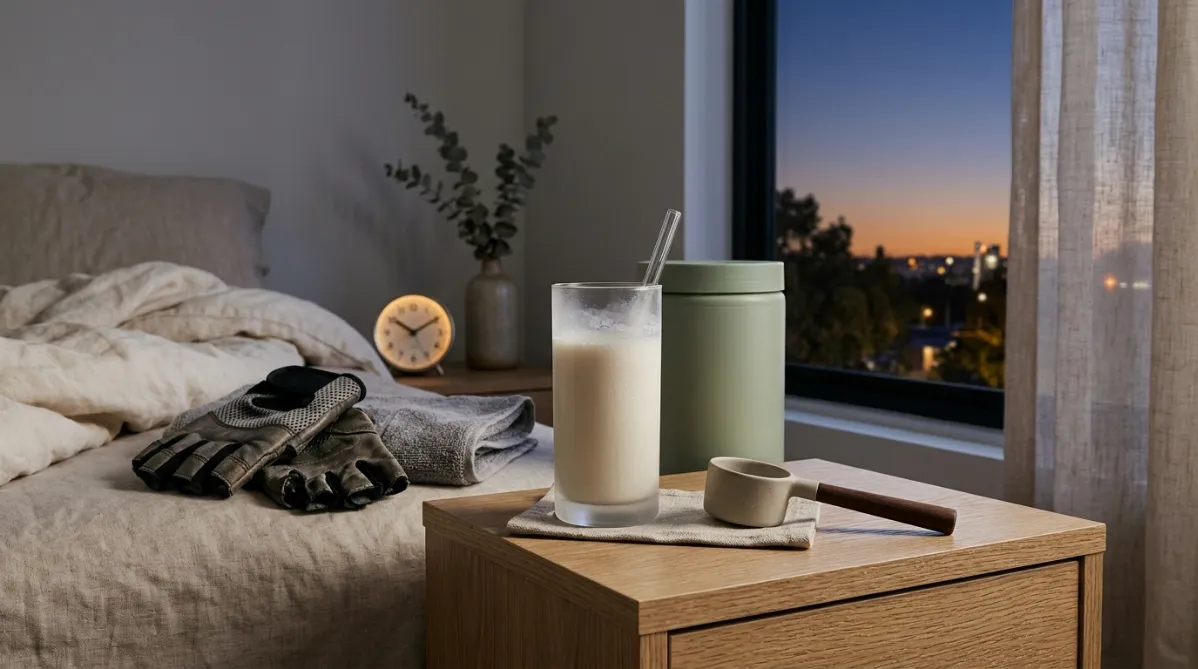
A quiet bedside scene at dusk, shot in soft natural light with a shallow depth of field. A tall frosted glass of creamy, pale-white shake sits on a light oak nightstand, with a thin film of condensation on the glass and a faint milky residue near the rim. Beside it, a matte ceramic scoop rests on a small linen coaster. A minimalist tub of unbranded protein powder in muted sage green sits slightly out of focus in the background.

To the left, a neatly made bed with oatmeal-colored linen sheets and a rumpled cream duvet. A pair of worn lifting gloves and a folded gray gym towel sit on the edge of the bed, suggesting an evening workout just finished. A small analog alarm clock reads about 10:30 PM, its soft face glowing faintly. A sprig of dried eucalyptus in a small stoneware bud vase adds an organic touch.

Through a large window on the right, deep indigo twilight fades into a warm amber horizon, and the last light spills across the wall in long, gentle gradients. A sheer curtain moves slightly. The palette is warm neutrals (cream, oak, sand, soft terracotta) with a few muted blue-violet accents from the evening sky.

The composition uses the rule of thirds, with the glass at the left-center foreground and generous negative space on the right, where headline text could sit. The mood is calm, restorative, and editorial, like a modern wellness and nutrition journal. The lighting is gentle and diffused, with subtle film grain and slightly lifted shadows. The textures of linen, wood, glass, and ceramic are crisp. The image is clean and uncluttered, with no text, logos, or people, and no futuristic or sci-fi elements.
nutrition

The 40 g Bedtime Shake: What Pre-Sleep Casein Does Overnight

BY DR. GYMBRO ·

Lift in the evening, then fast for eight hours: does that hurt recovery? A 2012 study gave 16 young men 40 g of casein 30 minutes before bed and tracked what happened overnight. The protein was digested and absorbed during sleep, whole-body protein synthesis jumped (311 vs 246 µmol/kg), and net protein balance flipped from negative to positive. Muscle protein synthesis was about 22% higher, though only borderline significant. Here is what the findings mean, what they don't, and how to use them.
A wide landscape editorial photograph of a sunlit minimalist gym corner with warm, natural morning light streaming through tall windows. In the foreground on a light oak wooden bench sits a small matte ceramic dish holding a few translucent amber softgel capsules, next to a brushed steel shaker bottle and a folded charcoal gray towel. The capsules catch the light with a soft golden glow, shallow depth of field blurring them slightly against the background.

In the softly blurred midground, a barbell loaded with black plates rests on a squat rack, with chalk dust lightly floating in the sunbeams. The walls are textured off-white plaster, and the floor is pale polished concrete. A potted green plant adds a touch of organic color near the window.

Laid casually beside the dish is an open notebook with a clean, hand-drawn bar chart in black ink: two bars of slightly different heights, one marked with a small question mark, suggesting uncertainty and interpretation. A slim pencil rests across the page. No readable text beyond simple marks.

The color palette is muted and modern: cream, warm beige, soft amber, charcoal, and sage green accents. The composition follows the rule of thirds, with the capsules and notebook in the lower left third and open negative space toward the upper right, ideal for headline overlay. Soft shadows, subtle film grain, and a calm, contemplative mood reminiscent of a contemporary health and science magazine. Shot as if with a 50mm lens at f/2.0, high-end lifestyle editorial aesthetic, clean and trendy, with no futuristic or sci-fi elements.
science research

750 mg of PA Added 2.6% Lean Mass in 8 Weeks—But There's a Catch

BY DR. GYMBRO ·

One small study found that trained men taking 750 mg of phosphatidic acid daily gained 2.6% lean mass in eight weeks, while the placebo group gained just 0.1%. Squat strength also rose more with PA, 12.7% versus 9.3%. But the authors' own conventional analysis found no significant differences. Their conclusions rest on a more lenient statistical method applied to just 16 men. Here is the dose, the results, and why this pilot study is a promising signal rather than proof.
A wide editorial still life on a pale sage-green seamless backdrop, shot from a slightly elevated angle in soft, diffused natural window light. On the left, a loose heap of fresh spinach leaves with deep emerald color and visible veining, a few leaves curling toward the camera with tiny droplets of water catching the light. Beside the leaves sits a minimalist amber glass supplement bottle with a plain cream label, its cap off, and a small scatter of off-white capsules spilling onto a matte ceramic plate. At the center-right of the frame, a polished steel barbell plate stands on its edge, partly in soft focus, suggesting strength training without cluttering the scene. In the foreground, a clean, slightly weathered wooden lab-style tray holds a slim stainless steel measuring tape coiled loosely and a folded paper with a faint abstract molecular line drawing, kept subtle and out of focus. A single red wax-style seal stamp lies near the edge of the arrangement, hinting at "ban" and regulation, with a small imprint half visible on the backdrop. The palette is restrained and modern: sage green, warm cream, soft amber, brushed steel gray, and one small accent of deep red. Shadows are gentle and elongated, falling to the right. Shallow depth of field, crisp focus on the spinach and capsules, a subtle film-like grain, and generous negative space on the right third of the frame for headline overlay. The overall feel is a contemporary health and science magazine cover: clean, tactile, quietly tense, and sophisticated, with no people, no text, and no futuristic elements.
nutrition

Spinach Anabolic Ecdysterone: 46 Men, 10 Weeks, Ban Urged

BY DR. GYMBRO ·

A "natural anabolic" found in spinach just got a WADA-funded stamp of effectiveness, and a recommendation to ban it. In a 10-week trial of 46 young men, ecdysterone supplementation was linked to significantly greater gains in muscle mass and 1RM bench press, with no rise in liver or kidney toxicity markers. The proposed mechanism runs through estrogen receptor binding, not the androgen receptor. Anyone searching for turkesterone should know what this single, relatively small study does and doesn't prove, and why tested athletes should be careful.
A wide editorial still life on a pale, warm-gray stone surface lit by soft morning window light from the left. In the foreground, a rustic ceramic bowl in matte oatmeal glaze holds dried ashwagandha roots, pale tan and gnarled, with a few scattered beside it. A small wooden scoop dusted with fine golden-beige powder rests next to the bowl. Behind them, a few olive-green ashwagandha sprigs with small orange-red berries in papery husks arc across the frame, adding a quiet pop of color.

Midground right: a matte black chalk-dusted dumbbell handle and a single brushed-steel weight plate lean casually against a linen-textured backdrop in muted sage. A folded cream cotton towel and a slim notebook with a pencil suggest a training log. The notebook is open to blank, softly lined pages with no legible text.

The background fades into a gentle blur of neutral beige and soft terracotta tones, with a hint of a plant shadow cast across the wall in dappled light. Fine dust and powder particles float in the light beams, giving a tactile, organic feel.

The composition follows the rule of thirds: botanical elements on the left and center, gym elements on the right, and negative space in the upper right for headline overlay. Shallow depth of field, crisp focus on the roots and powder, creamy bokeh behind. Color palette: sage green, warm sand, terracotta, charcoal black, and a touch of burnt orange. The mood is calm, modern, and trustworthy, like a premium wellness and science magazine. Photographed on a 50mm lens, natural grain, subtle film-like contrast, clean minimalist styling, high-end editorial photography.
nutrition

The Ancient Herb That Beat Placebo in an 8-Week Lifting Trial: Strength, Muscle Size and Testosterone

BY DR. GYMBRO ·

Could a centuries-old Ayurvedic root really out-lift a placebo? In an 8-week randomized trial of 57 novice lifters, men taking 300 mg of ashwagandha extract twice daily gained more bench-press strength, more arm and chest size, and a bigger testosterone rise than the placebo group. They also lost more body fat. The catch is that the study was small, short and limited to beginner men. Here's what the data show, how the dosing worked, who might benefit and why you should stay skeptical.
A wide, editorial flat-lay photograph shot from directly above on a pale warm-gray stone countertop, lit by soft natural morning window light with gentle diagonal shadows. On the left, a neatly arranged cluster of whole-food protein sources: two seared chicken breast slices with a golden crust, a small ceramic bowl of creamy Greek yogurt topped with blueberries, three halved soft-boiled eggs with jammy orange yolks, a handful of raw almonds, and a small pile of dried lentils scattered on a linen napkin. At the center, a matte white shaker bottle and a wooden scoop resting in a pile of fine vanilla-colored protein powder, a few grains dusted artfully across the surface. On the right, a minimalist kitchen scale in matte black displaying a portion of food, next to an open notebook with a hand-drawn curve that rises steeply and then flattens into a plateau, drawn in a deep terracotta ink pen, with a small dot marking the bend. A brass pen lies beside the notebook. A single dumbbell with a brushed steel finish sits partially in frame at the upper right corner, grounding the fitness theme without feeling gym-like. Color palette: warm cream, sage green, terracotta, soft charcoal, and butter yellow accents, with generous negative space along the top edge for title overlay. Shallow depth of field, crisp textures, subtle film grain, modern lifestyle magazine aesthetic, clean and calm composition, 16:9 landscape.
nutrition

How Much Protein Actually Maximizes Muscle? The 1.6 g/kg Plateau, Explained

BY DR. GYMBRO ·

Think you need 2+ grams of protein per pound to grow? A meta-analysis of 49 trials and 1,863 adults found muscle-building benefits leveled off around 1.6 g/kg per day. The upper confidence limit reached about 2.2 g/kg, giving lifters a practical range instead of an arbitrary mega-dose. Trained lifters gained the most from supplementation, while the benefit shrank with age. Here is what the numbers mean for your plate, your shaker bottle and your budget.

This page is available in